
They are a true dream team: highly transparent glass and plastic, which offers immense geometric flexibility. However, manufacturing products from both materials by overmolding glass presents numerous challenges.
Sometimes, nothing but glass will do—such as in the field of medical technology. This applies, for instance, to the measurement of gases using sensors, the use of lens attachments, or instances where components must withstand autoclave sterilization. The transparency of glass and the geometric flexibility of plastic make for an unbeatable combination—though one that presents certain challenges. Glass and plastic do not bond with each other and exhibit different thermal behaviors.
Moreover, experience with chipped eyeglass lenses or mirrors shows that glass is highly sensitive to localized stress. Plastic is injected into the mold at pressures of up to 2,000 bar. Can an inserted glass element—intended to be overmolded—withstand this? Specialized technical glass becomes increasingly brittle as its refractive index rises; the same applies to variants containing rare metals, which are of interest for applications such as optical measuring instruments.
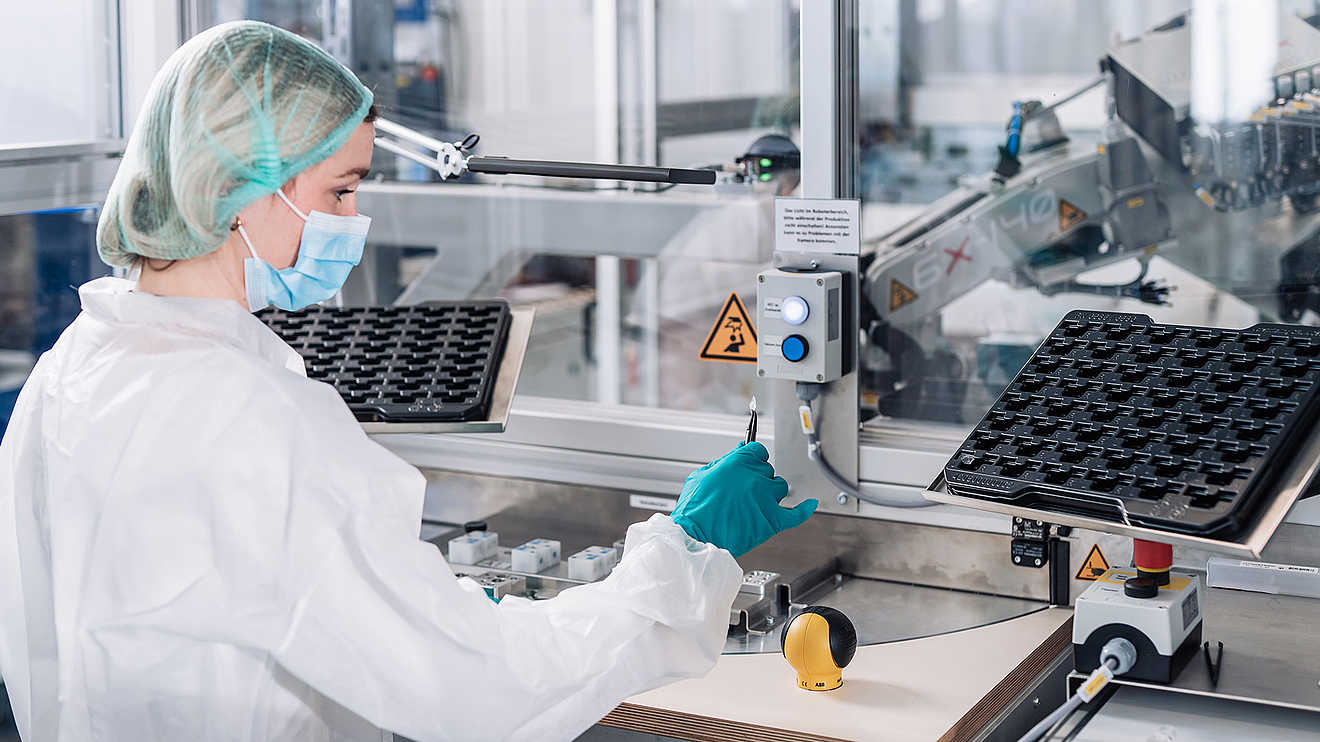
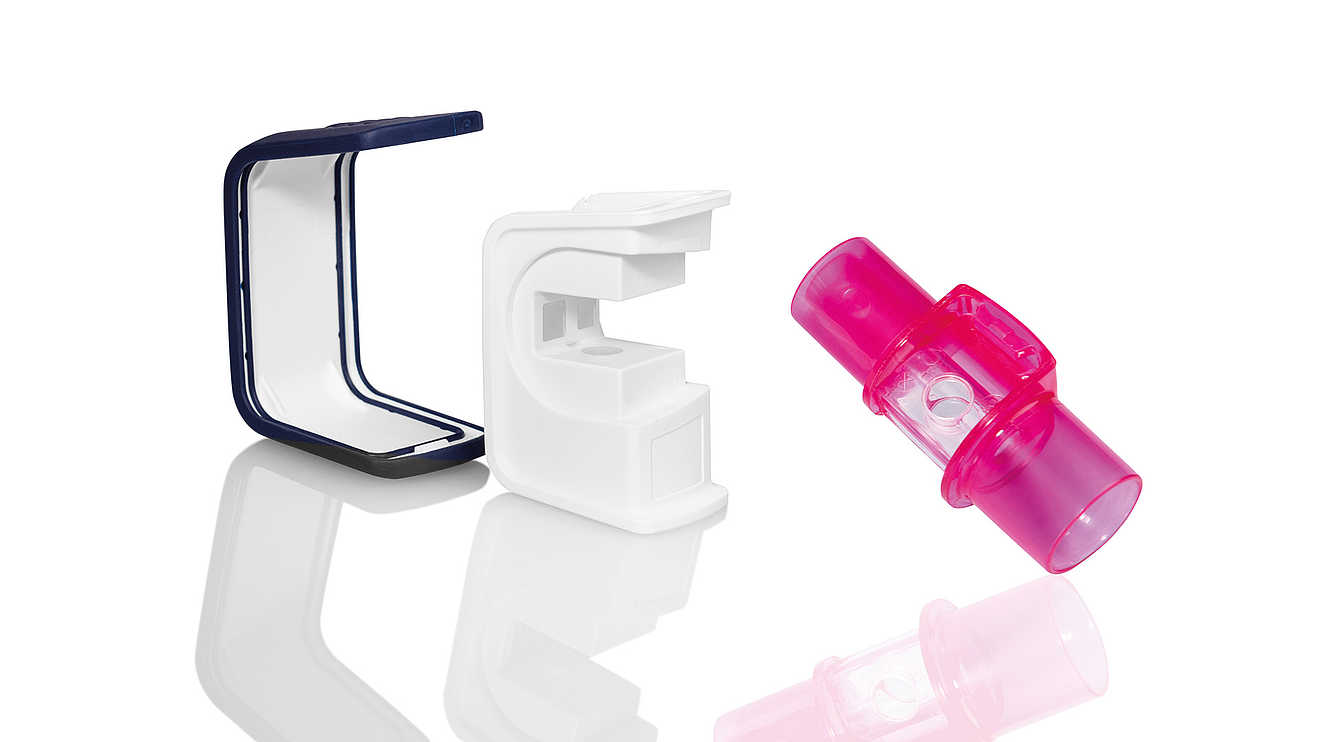
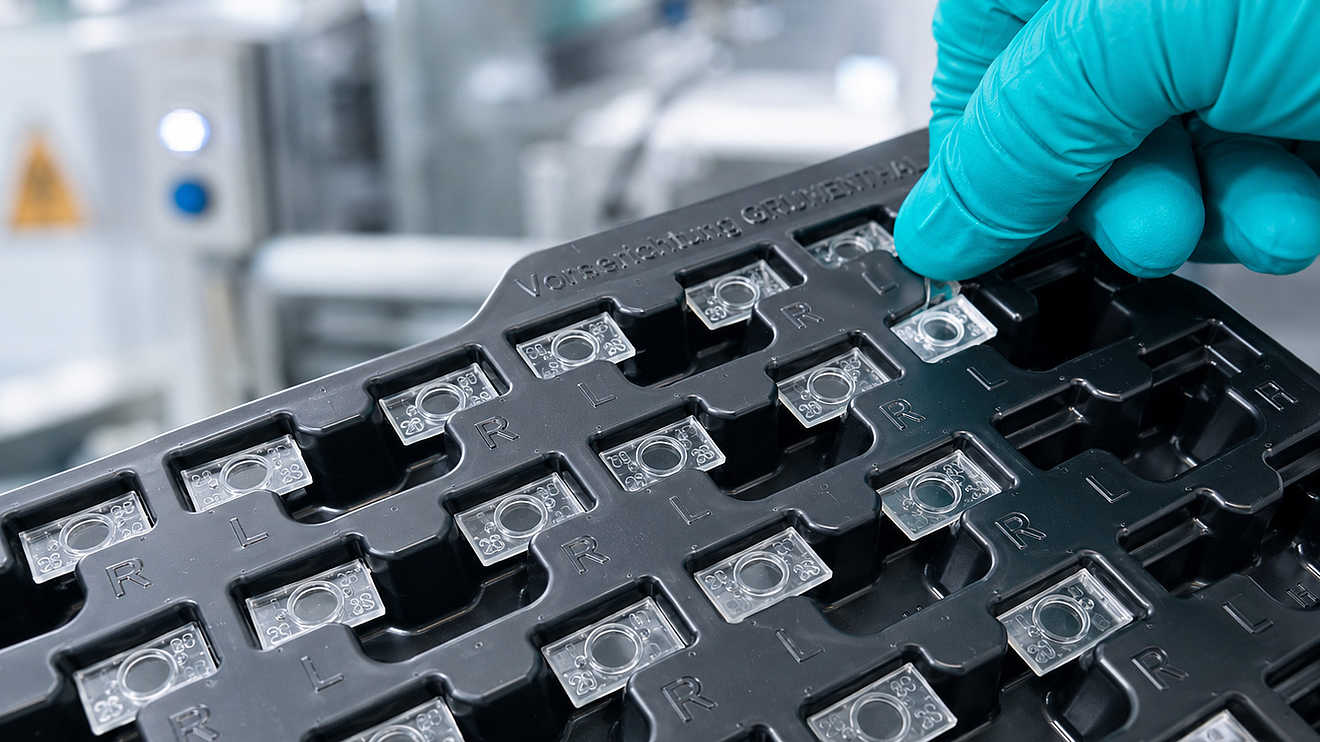
Nevertheless, KH succeeded in overmolding variously shaped glass inserts in such a way that the plastic forms a kind of window frame around them, thereby integrating them into the surrounding component geometry. The development process required for this took five years. The challenge lay in positioning the lenses so they were suspended freely within the mold, enabling the edges to be completely overmolded in a single process step. The initial window used to develop this new technology measured a few millimeters in diameter and was approximately one millimeter thick. Manufacturing tolerances of just a few hundredths of a millimeter had to be taken into account, as did the fact that the preload—typically applied to inserted components to compensate for injection pressure—was not an option with glass. The mold concept therefore demanded innovative solutions, which the design team led by Michael Klar successfully devised. To maintain a competitive edge, these solutions cannot be explained in detail here. In the current mass-production application for the medical sector, a robot fully automatically places several different glass windows into the mold, where they are then overmolded to create a frame-like structure. The resulting component acquires its final geometry in a subsequent process. To develop the automation system, a dedicated injection mold was created at the start of the project to allow the expensive glass lenses to be replaced by plastic dummies. As the solution neared completion, the "real" inserts were used increasingly more often.
A key issue concerned the seal integrity of the finished assemblies in accordance with customer specifications. Since the materials do not form a chemical bond, the plastic had to grip the glass tightly enough—via material shrinkage—to prevent air leakage, without, of course, damaging the glass. In other past research projects involving glass overmolding, attempts had been made to insert a soft component as a bonding layer between the two materials. However, the project had to be discontinued due to a lack of success. KH’s technology eliminates the need for an intermediate layer; the glass is completely encapsulated by various plastics—with or without reinforcing agents and fillers. Following the injection molding process, inline camera and leak tests are performed.
The finished product is suitable for autoclave sterilization but is relatively expensive, primarily due to the special glass window. For single-use applications—also required as part of the project—KH developed another innovative process that uses a functional foil instead of glass for the window. The greatest challenge here was the so-called "frog effect," where the wafer-thin layer would bulge upward or downward due to plastic shrinkage. To address this, an intelligent composite system is now used to keep the functional foil perfectly flat and parallel, ensuring precise measurement results.
The KH team even won the coveted TecPart Award for an innovative eye funnel, as the component combines the best of three material worlds: an optical sapphire glass lens, a robust stainless steel thread, and plastic (POM)—which, thanks to its geometric flexibility, connects everything together via a positive fit, eliminating the need for the bonding processes typically used in the past.
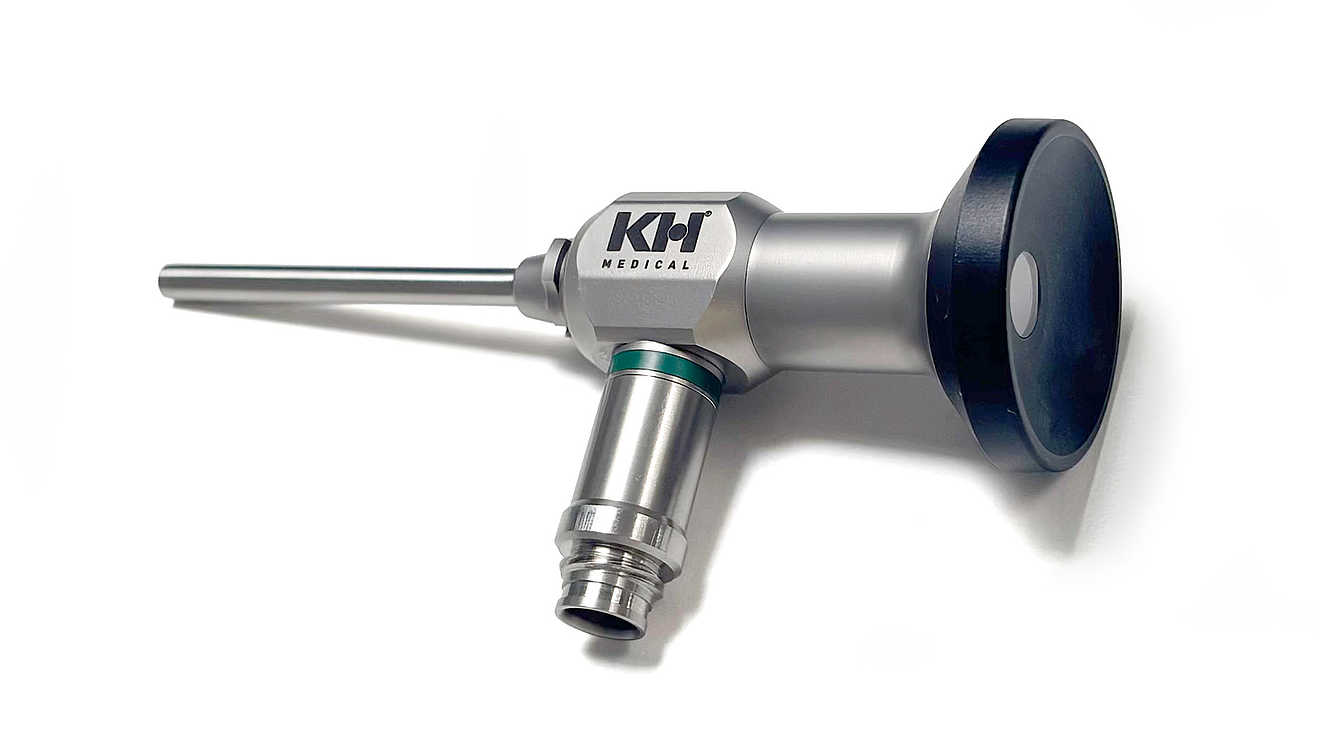
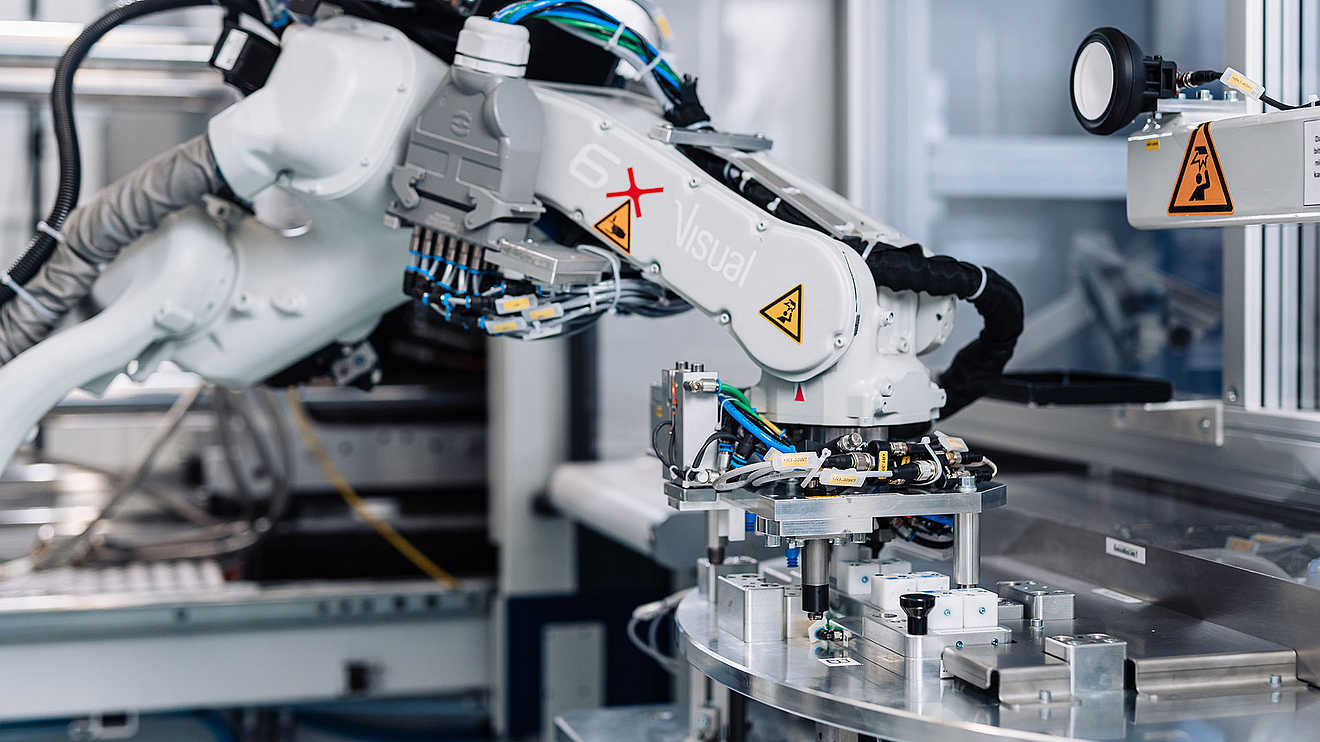
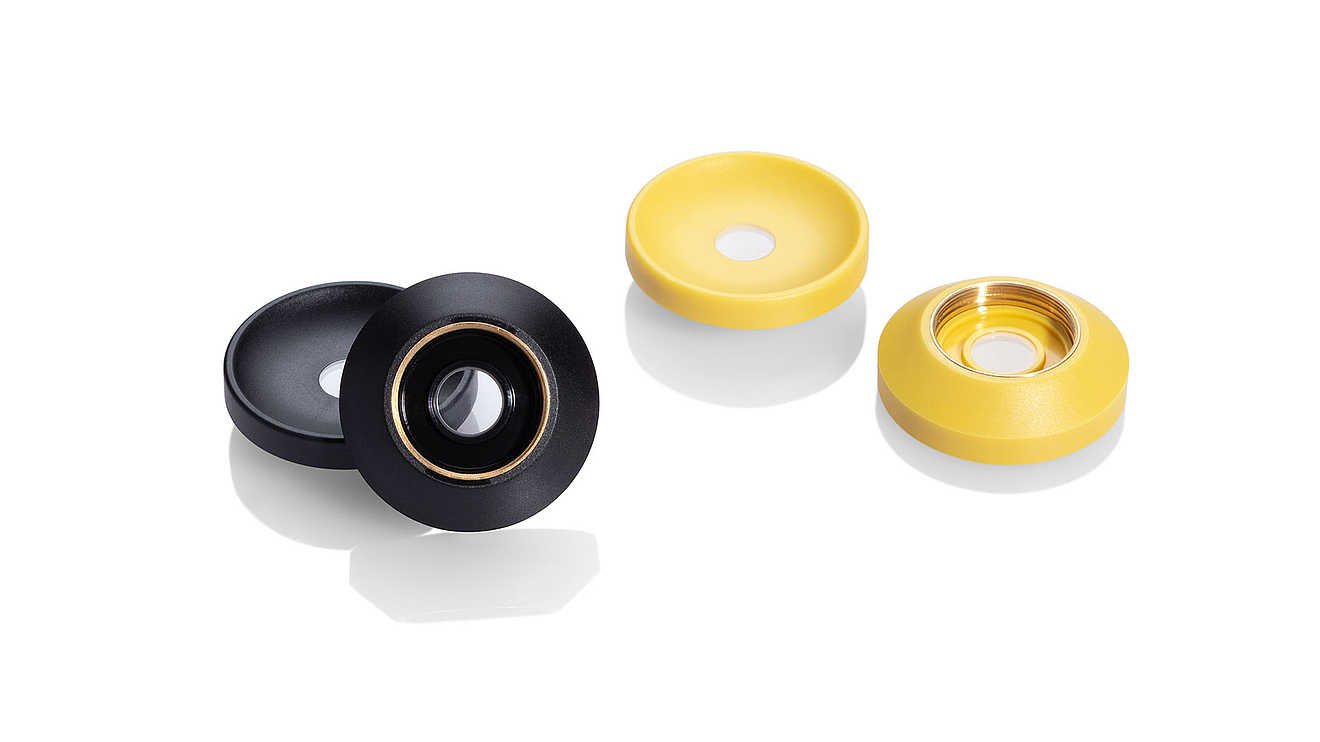
To achieve this, the glass lens (8 mm diameter, 1.8 mm thickness) and the threaded insert are automatically and precisely loaded into the injection mold in a high-volume production process. The lens must be positioned perfectly flat to ensure there is no optical distortion when the eye funnel is in use. It is held in place by a vacuum, while two retractable pins secure the threaded insert. Both inserts must withstand the injection molding process—carried out on a machine with a clamping force of 500 kN—without shifting position or sustaining damage.
When designing the process, particular attention was paid to plastic shrinkage; the goal was to ensure a secure bond without exerting excessive pressure on the glass, which could compromise optical performance. The injection mold is designed to accommodate threaded inserts of various sizes without requiring modification.
The eye funnel is used in optical instruments for laboratory and medical applications and withstands steam sterilization in an autoclave.
Technical challenges in overmolding glass with plastic
The KH process for overmolding glass requires no adhesion promoters, soft components, or similar additives. The lens is placed into the mold in a free-floating manner. Pressure conditions are adapted to the material.
In general terms, overmolding glass is a highly demanding process classified as a type of insert molding. Unlike conventional injection molding, the process does not involve processing plastic alone; instead, a foreign material is integrated into the plastic component. Glass presents specific challenges in this regard, as it is brittle and sensitive to mechanical stress and significant temperature fluctuations. Success therefore depends heavily on appropriate component design, mold configuration, the material combination, and process parameters. Key factors to consider include:
1. Differential thermal expansion
The difference in the coefficients of thermal expansion between glass and plastic is particularly important. While plastics expand significantly in response to temperature changes, glass remains virtually dimensionally stable. This difference can lead to internal stresses within the component after cooling. Furthermore, the hot molten plastic comes into contact with a relatively cool glass element. This creates temperature gradients that can cause stress. If the temperature difference is too great, the glass may crack. To prevent this, the glass is often preheated, which significantly reduces thermal stresses.
- Glass: approx. 8–9 × 10⁻⁶/K
- Plastics: often 50–150 × 10⁻⁶/K
2. Plastics and Adhesion
Various thermoplastics are used for overmolding glass. The choice depends on mechanical requirements, operating temperature, and the desired level of adhesion.
Polycarbonate is frequently used when high transparency or impact resistance is required. Polyamide is particularly suitable for technical applications involving high mechanical loads. Thermoplastic elastomers are used when sealing functions or a soft tactile feel are required.
Not all plastics adhere equally well to glass. Consequently, the glass surface is often pre-treated or an adhesion promoter is used.
3. Glass breakage
The greatest challenge during the process is glass breakage caused by the forces acting within the mold. If the glass is too thin or improperly supported, it can crack. The following factors come into play during injection molding:
- Injection pressure
- Holding pressure
- Mold forces
- Temperature differences
4. Mold Design
Mold design plays a pivotal role in the success of the process. The mold must position the glass precisely and hold it with minimal stress. Modern molds often feature specialized centering systems and vacuum holding mechanisms to prevent the glass from shifting during the injection process.
In addition, simulations are used to analyze the flow behavior of the molten plastic prior to mold construction.
Key factors include:
- precise seating of the glass insert
- avoidance of stress
- optimized gate location
- uniform temperature control
- reliable venting
Typical Applications
- Smartphone camera lenses
- Sensor windows
- Automotive cameras
- LED lights
- Laboratory and diagnostic systems
- Viewing windows in technical housings
Quality Inspection
The following are frequently inspected after overmolding:
- Adhesion strength
- Sealing integrity
- Stresses in the glass (e.g., using polarized light)
- Crack formation
- Dimensional accuracy
- Climate resistance
- Thermal shock resistance
Conclusion
Overmolding glass with plastic is a demanding yet highly effective manufacturing process. It enables the combination of glass's excellent optical, chemical and mechanical properties with the design freedom and cost-efficiency of modern thermoplastics. However, successful implementation requires careful coordination of material selection, mold design and process control. Thermal stresses, adhesion issues and the materials' differing thermal expansion rates, in particular, place high demands on development and production.
Significant progress has been made in recent years thanks to modern surface treatments, precision mold technology, and digital process monitoring. This has led to the creation of increasingly high-performance hybrid components for applications in the automotive industry, medical technology, electronics and many other sectors. Given the trend toward the miniaturization of technical products and the growing demand for multifunctional components, the overmolding of glass with plastic will continue to gain importance and play a vital role in industrial manufacturing.