
While many treatment methods already exist depending on the type of contamination (e.g., thermocatalytic oxidation, plasma treatment, adsorption, etc.), not one is capable of reliably purifying multi-gas pollutants. Consequently, systems have historically been custom-designed—at great expense—to combine multiple processes. SmartAir, by contrast, now offers a complete seven-stage process (see diagram) that can be implemented simply and with all components coordinated.
The driving force behind SmartAir was the Chinese facility KH Unikun in Suzhou. Environmental regulations there are stricter than in Germany and exhaust air is monitored online by the government. At the same time, space is limited, creating the need for a particularly efficient and flexible solution.
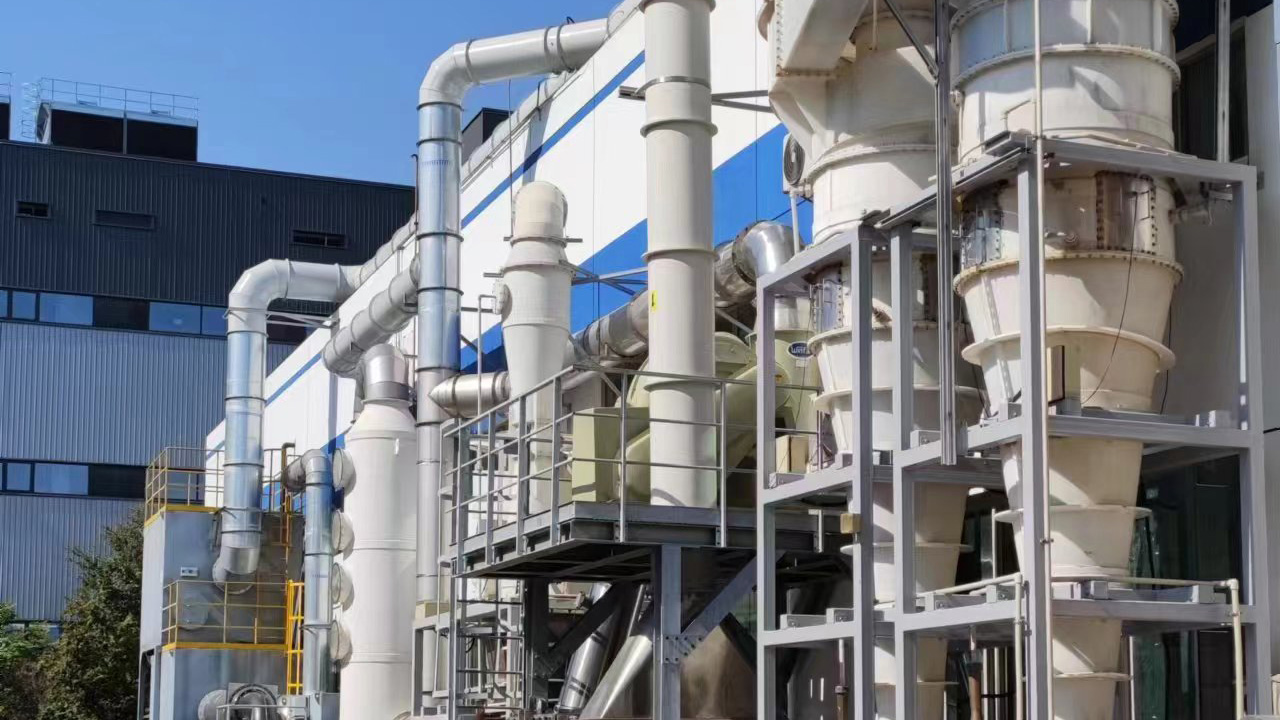
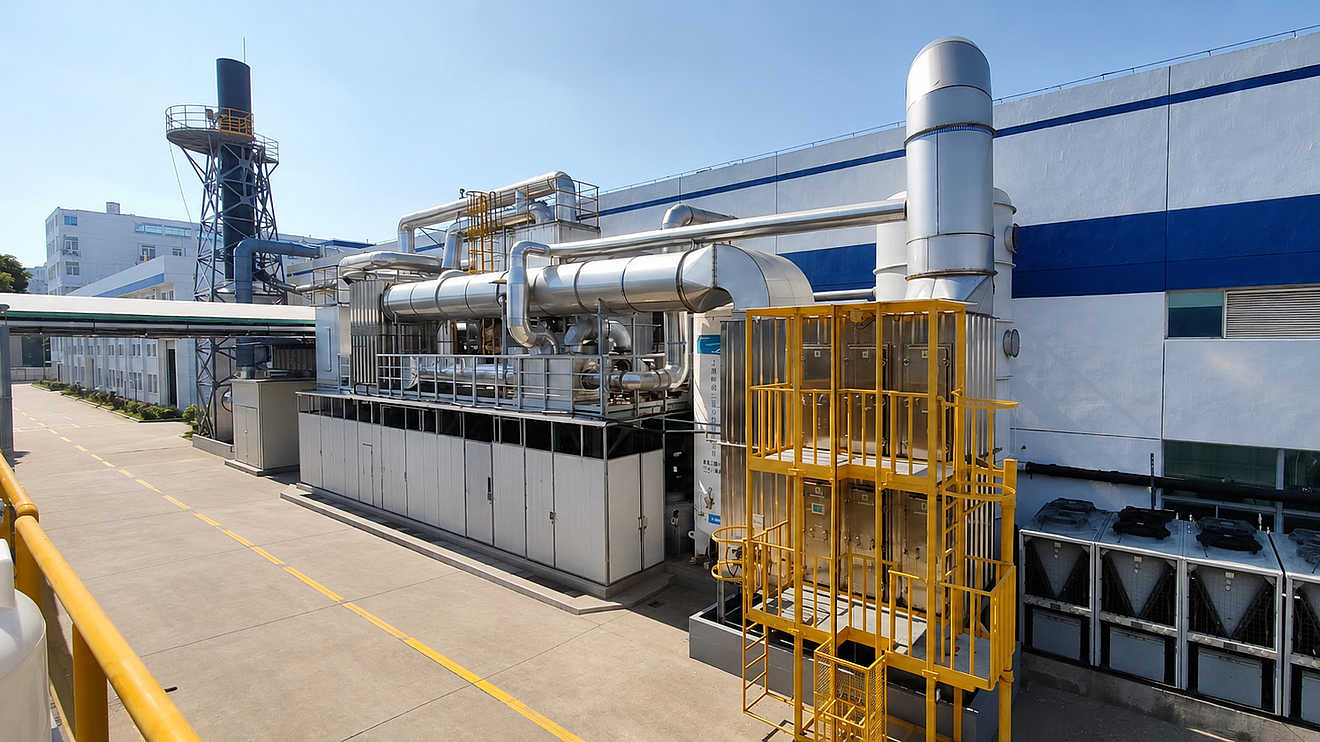
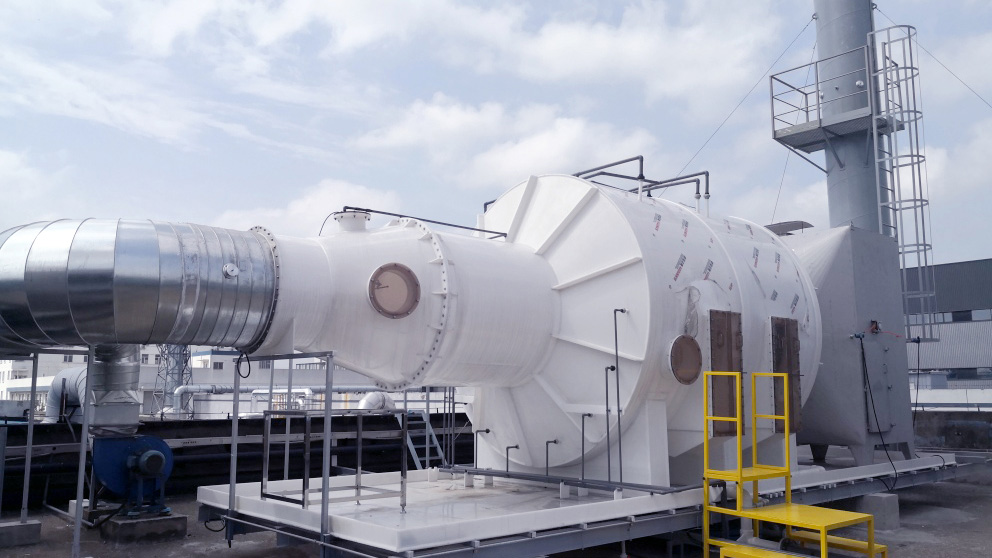
At KH Unikun, the SmartAir pilot plant purifies exhaust air from a painting facility for UV and high-gloss coatings. Process stage 1 is also connected to the injection molding production line.
The concept is so modularly designed that it can be deployed across various industries to meet specific requirements. Interested parties can contact KH Unikun for further information.
- Throughput > 20,000 m³/h
- Pollutant load up to 0.5% or 5 g/m³
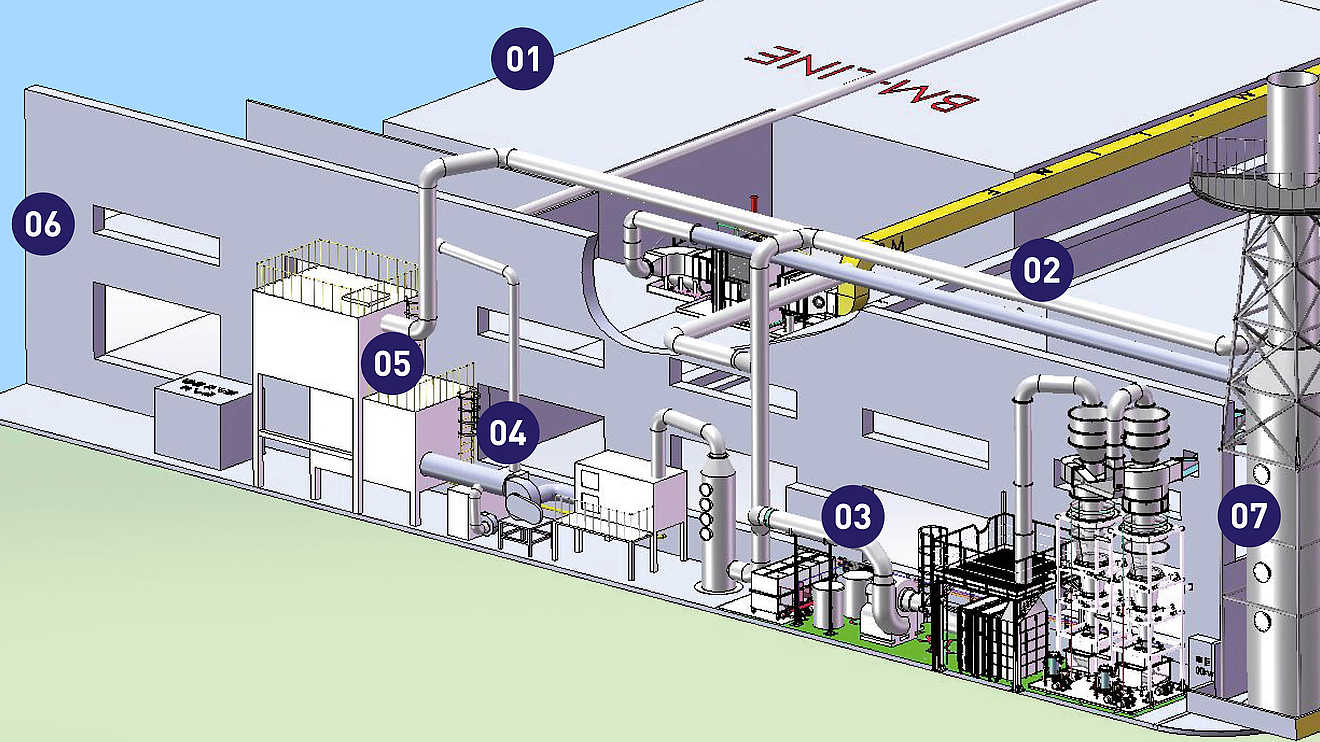
Process stages:
- Hydrodynamic agglomeration and separation of particles from the exhaust gas stream (using atomized ionic scrubbing solution)
- Exposure of the exhaust gas stream to photon radiation (IR / microwaves)
- Routing of the exhaust gas stream through a magnet and plasma tube assembly. Followed by:
- Cyclone scrubber using alkaline and acidic reaction fluids
- Multi-catalyst chambers with an intermediate magnet assembly
- Atomization of an ionic solution using ultrasonic energy; precipitation via high-voltage electrolysis
- Final cyclone scrubber; photocatalytic wet process for oxide reduction.