
Two of the most important technologies are In-Mold Labeling (IML) and In-Mold Decoration (IMD). While both processes integrate decorative elements into the plastic component during the injection molding stage, they differ in terms of materials, areas of application and technical capabilities.
In-Mold Labeling (IML) – Operating Principle
In the In-Mold Labeling process, a foil—which has been printed, shaped to match the part geometry and die-cut—is placed into the open mold prior to injection molding and secured against the mold wall, typically using vacuum or electrostatic charging. Molten plastic is then injected into the mold under high pressure.
During injection, the foil bonds permanently with the molten plastic. Once cooled, the finished component is ejected with the decoration firmly integrated. There are two variants regarding the arrangement of the individual component layers.


With back-molding, the decoration is encapsulated between the component body and the foil overlay, thereby protecting it. Option 2 (front-molding) produces components with a striking depth effect; the decoration lies beneath a glass-like layer several millimeters thick. Care must be taken not to damage this layer during component installation.
Advantages of In-Mold Labeling
- High-quality surfaces; perfect print images with brilliant colors and, if desired, photorealistic designs
- Visual effects such as "black panel" (disappearing effect), day/night design, and chrome look
- Potential to integrate electronics into the component; capacitive controls (via printing conductive layers onto the foil)
- Printed foil bonds completely with the plastic; no edges that can peel off
- Decoration is resistant to moisture, chemicals, abrasion, and UV radiation
- Cost-effective production: No additional production steps—such as painting or printing—required
IML Process Sequence
- The manufacturing process consists of several steps:
- Decorating the foil via screen printing
- 3D forming and die-cutting of the foil blank
- Inserting the blank into the injection mold
- Securing it using vacuum or static charge
- Injecting the molten plastic
- Bonding the blank and the plastic
- Cooling and demolding the finished component
In modern production facilities, the handling of the blanks is usually fully automated using robots. This enables high production volumes while maintaining consistent quality.
It is the basis: The classic screen print on polycarbonate foil or aluminum. Hardly any other process offers a similarly high freedom of design. For small part quantities, we also make use of the most up-to-date digital printing installations.
- Size: max. 400 x 160 mm, 360 x 245 mm resp.
- Thickness: up to 0,75 mm, aluminum up to 0,4 mm
- Material: polycarbonate or aluminum
- Surface: UV-stable, detergent resistant, on request
- hardened and thereby scratch-resistant
- Application of conductor paths possible
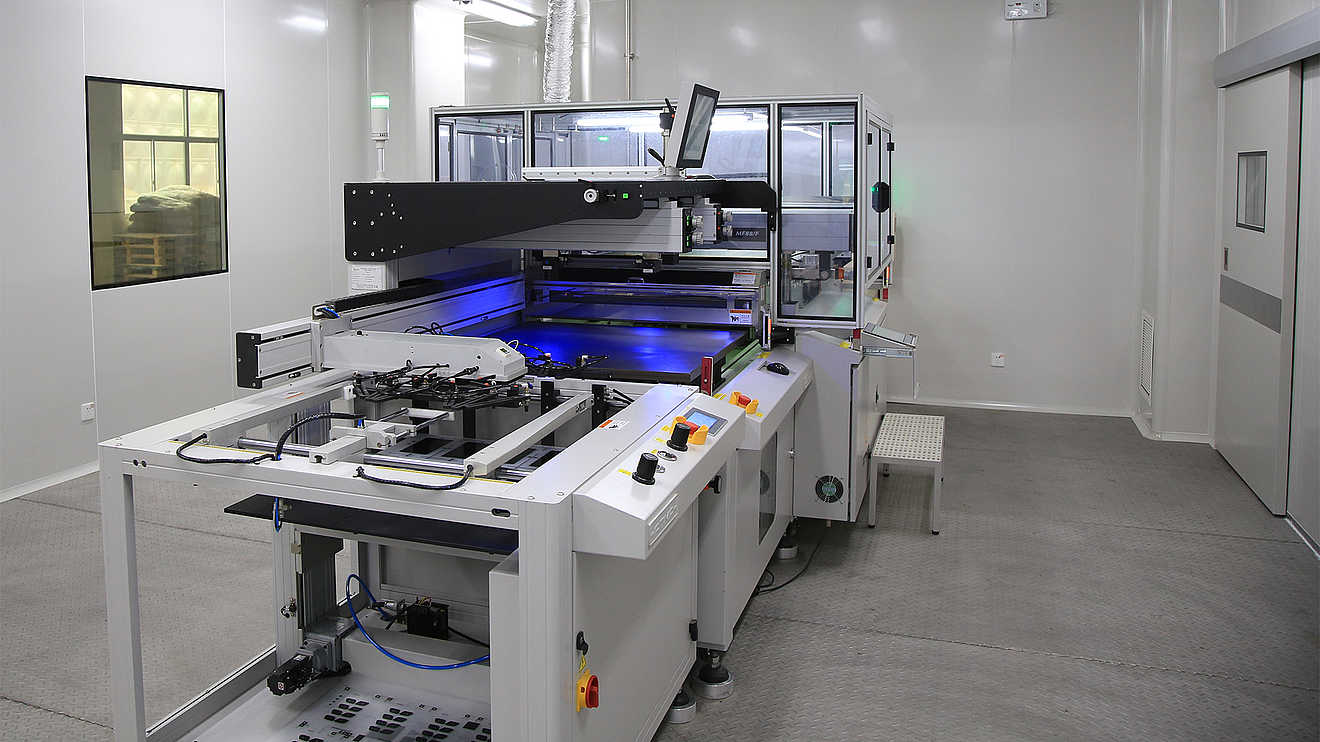
Forming of the printed foils follows on various semi and fully automatic machines developed and perfected by KH themselves. The focus in this instance was on high precision and maximum process speed.
The required tools were produced on our premises. Forming heights of polycarbonate foils up to 25 mm, and for aluminum up to 8 mm are possible.
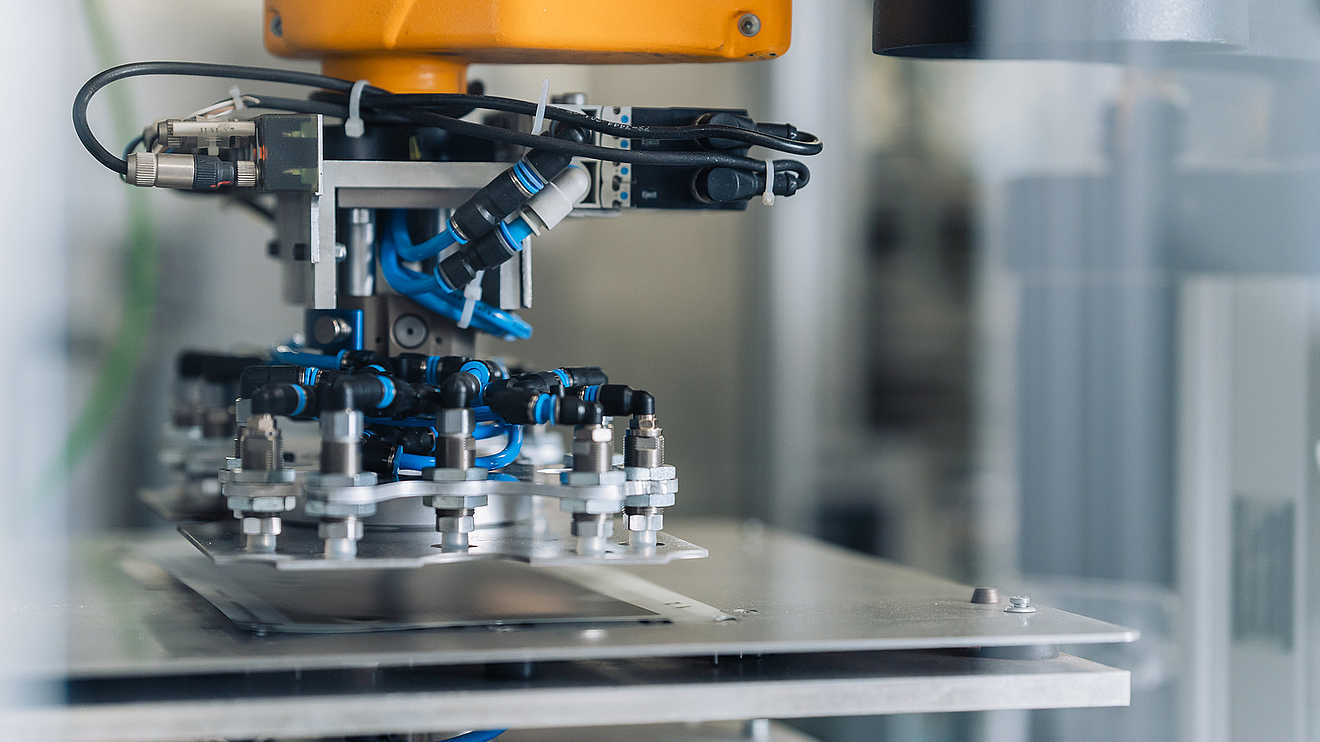
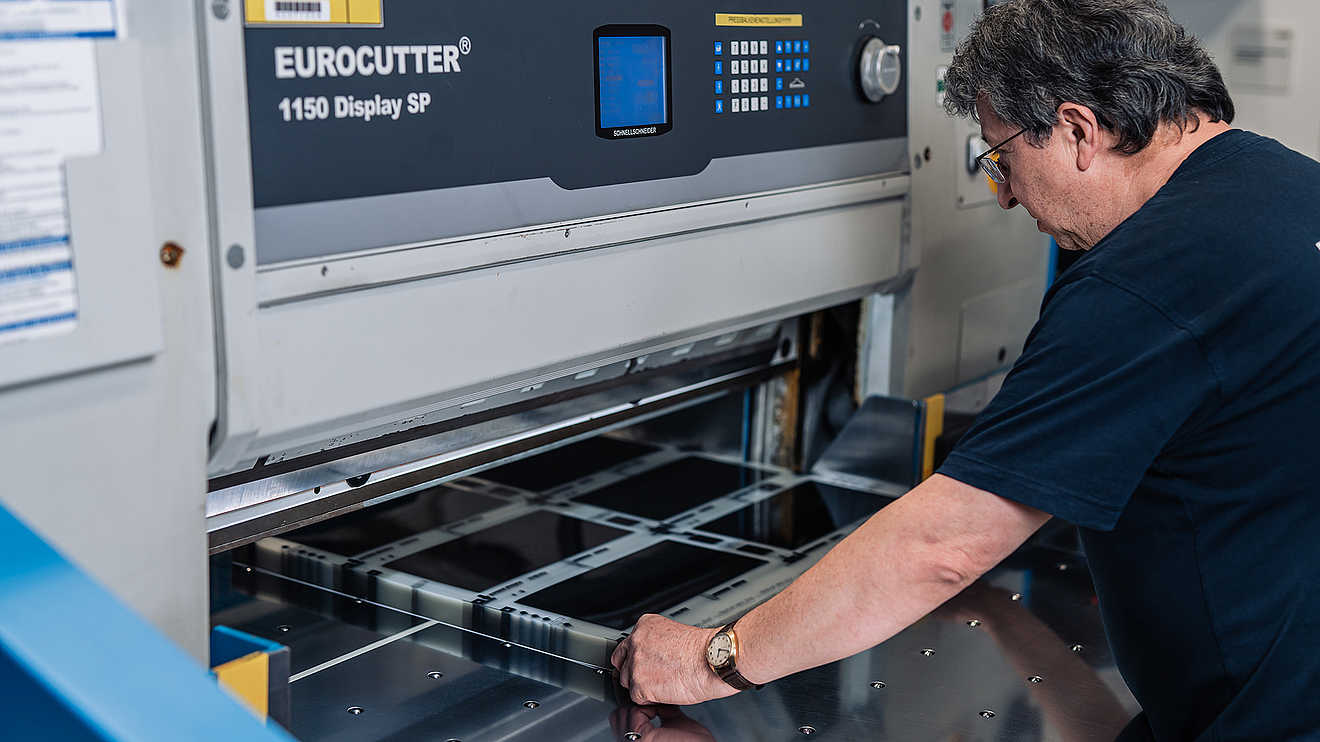
Depending on the requirements: Flat foils allow themselves to be easily cut with a CNC-controlled cutter. For 3D formed foils, the part geometries are separated from the protruding foil remnant with a stamping tool.
The development as well as the production of the tools takes place at KH. In this way, the stamping technology has been adapted to foils with scratch-resistant coating as well.
We offer the entire range: IML decoration plus 1K, 2K or 3K injection molding. The insertion of the foil takes place automatically while camera systems monitor the position and quality of the foils as required.
Back molding as well as front molding of the foil is possible. The latter being recommended should depth effect be desired.

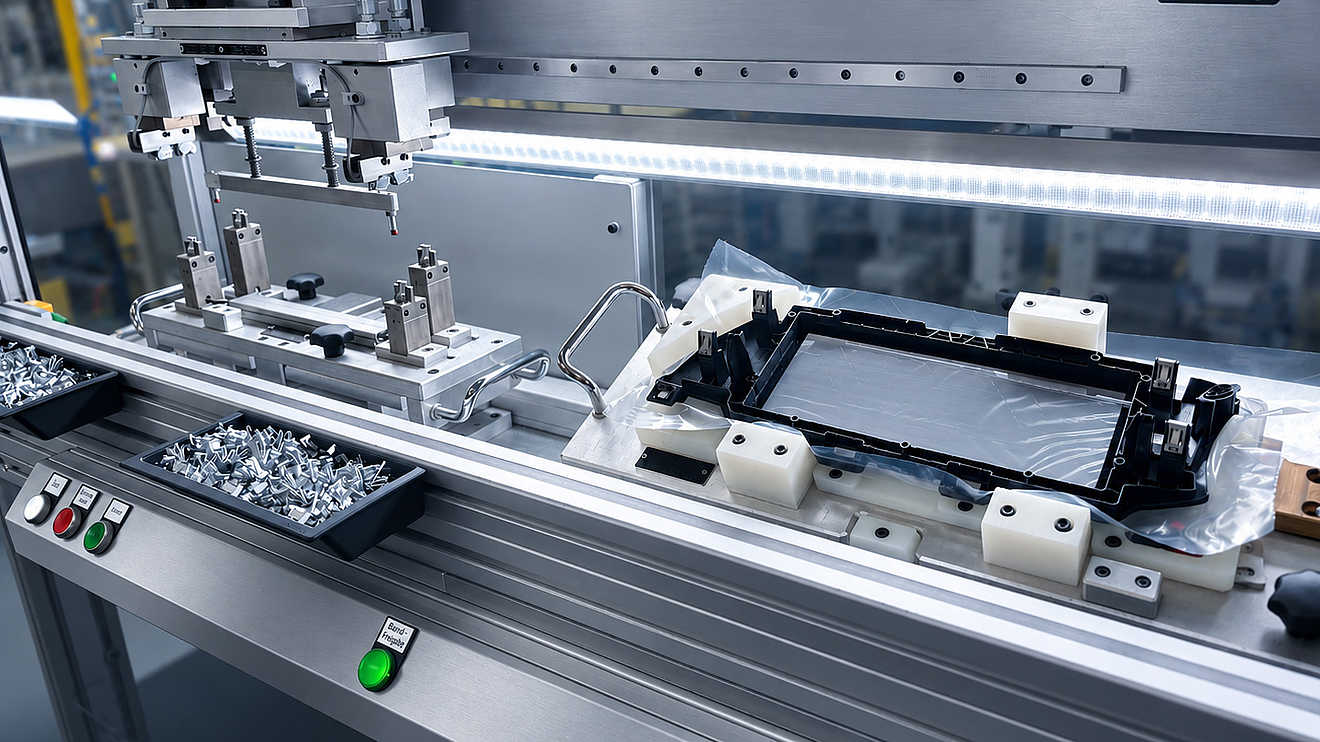
For the IML-decorated control panel of the Alfa Stelvio, four metal clips are applied fully automatically for subsequent fastening, and their correct fit is then also checked fully automatically. In addition, the large display window is fitted with a protective foil that must be applied without bubbles.
“Normal” assemblies are performed manually or automatically, while ultrasonic welding and staking are part of our repertoire.
Materials
Thermoplastic foils are predominantly used for the IML process. The choice of material depends on the material of the injection-molded part. Ideally, both should possess similar properties to ensure optimal bonding during the injection molding process.
Areas of Application
In-mold Labelling is used for technical parts wherever high-quality surfaces combined with specific functionality are required. Typical products include:
- Automotive interior controls
- Control panels for household appliances
- White goods
- Medical devices
In-Mold Decoration (IMD) – Basic Principle
The In-Mold Decoration process also aims to permanently incorporate decorative elements into the plastic component during injection molding. Unlike IML, however, this process involves the transfer of printed layers from the foil to the component. The foil itself does not bond with the surface.
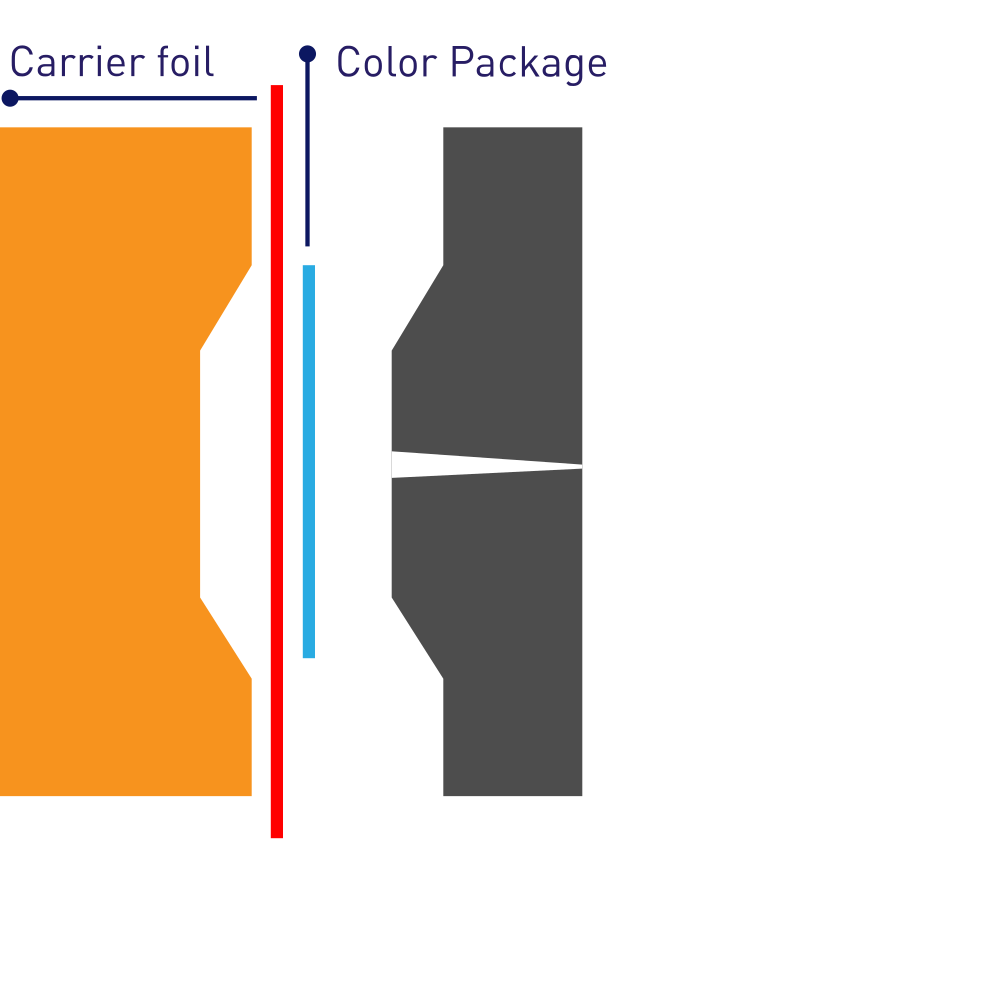
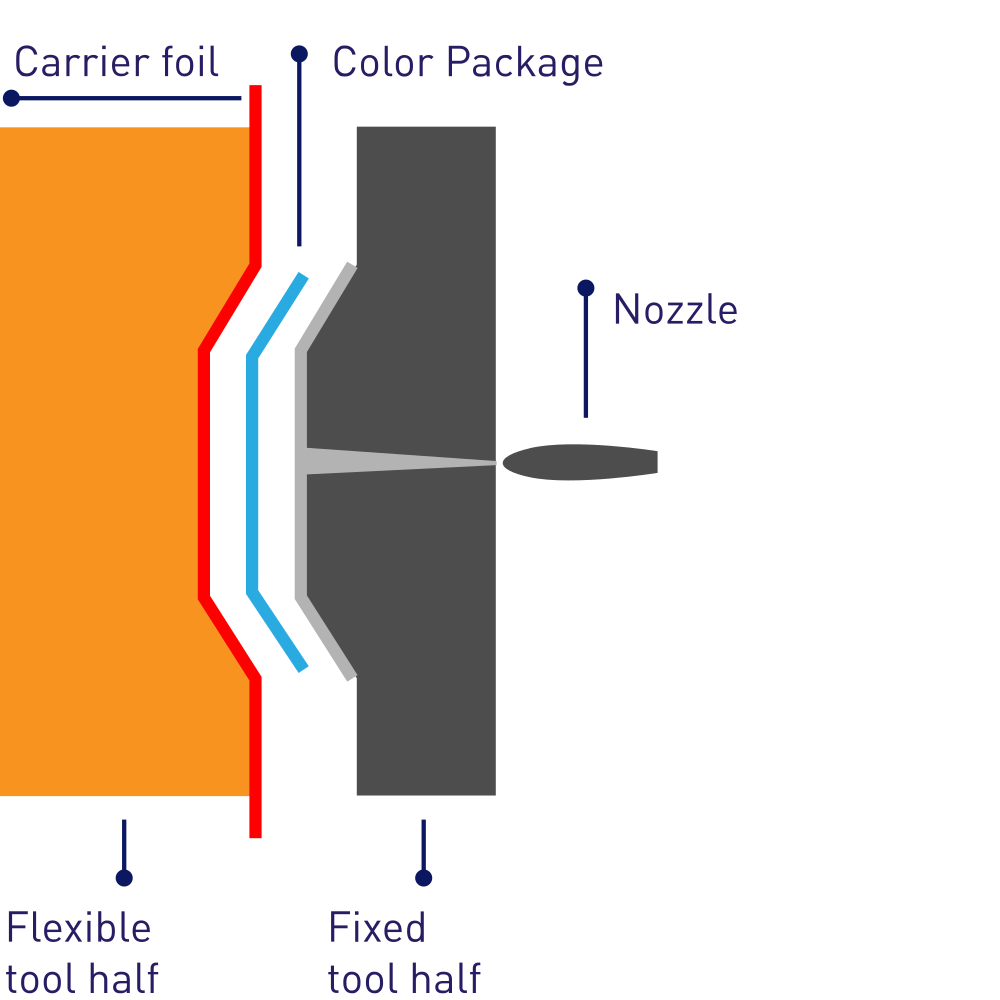
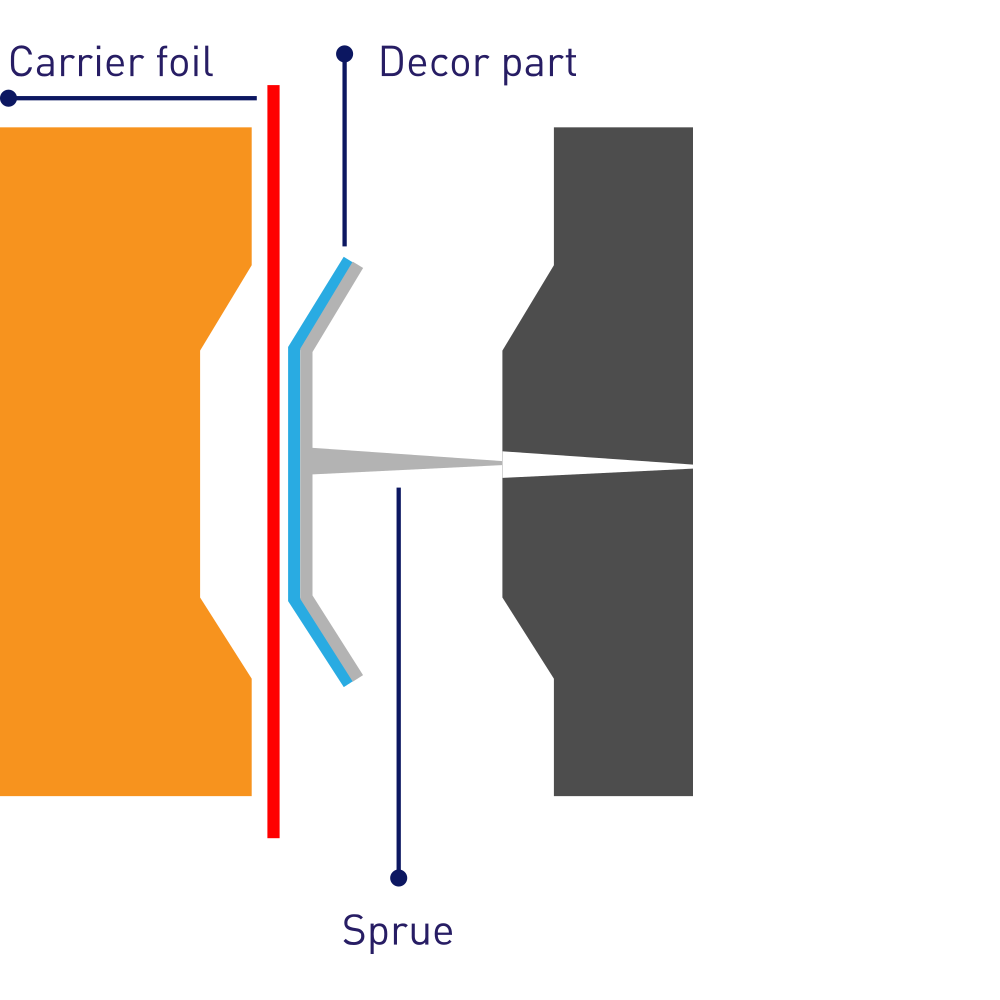
The decorated carrier foil passes through the injection molding tool. Heat and pressure transfer the applied color layer onto the component surface, where it bonds permanently with the plastic. Once the mold opens, the finished component is removed.
In addition to colored designs, functional layers can also be transferred:
- Metallic finishes
- Wood-effect finishes
- Carbon-look finishes
- High-gloss surfaces
- Matte textures
- Conductive layers
This enables the production of significantly more complex and premium-quality surfaces.
Materials
The decorative foils used often consist of:
- Polycarbonate (PC)
- Polyester (PET)
- Polycarbonate blend
- PMMA (acrylic)
In addition, they feature several functional layers:
- Protective lacquer
- Color layer
- Decorative layer
- Adhesive layer
- Carrier foil
This results in surfaces of exceptionally high quality and durability.
Advantages of the IMD Process
A major advantage lies in the virtually limitless design possibilities. High-gloss, matte, textured or metallic surfaces can be created.
The decoration is permanently protected, as it lies beneath a transparent protective layer. Scratches, cleaning agents or UV radiation have little impact on the decoration.
In addition, multiple functions can be combined within a single foil. Modern IMD foils, for example, enable illuminated controls, capacitive touch sensors or integrated buttons.
Since decoration and shaping take place simultaneously, there is no need for subsequent painting or printing.
Areas of Application
The process is primarily used for high-quality products:
- Automotive dashboards
- Control panels
- Household appliances
- Smartphones
- Tablets
- Medical devices
- Consumer electronics
IMD offers significant advantages, particularly wherever design and function need to be combined.
Comparison of IML and IMD
Depending on part geometry, intended use and required production volume, one process may be more suitable than the other. Sometimes, a combination of both is the ideal choice. We would be happy to advise you on the available options.
Significance for modern plastics technology
Increasing demands regarding design, sustainability and functionality are making both IML and IMD increasingly important. Both processes reduce production effort by combining multiple manufacturing steps into a single process.
In addition, they yield durable products with high-quality surfaces that do not peel or wear off. At the same time, material consumption and production costs can be reduced.
Another advantage is improved recyclability. With IML, the label and packaging can often be made from the same plastic, eliminating the need for complex material separation.
Foil-based processes are also continuously evolving in the field of "smart surfaces." This allows for the integration of sensors, lighting or touch-sensitive controls, opening up entirely new possibilities for future products.
Conclusion
In-mold labeling and in-mold decoration are among the most important plastics processing methods today for producing high-quality surfaces. Both technologies combine decoration and the injection molding process into a single step, thereby enabling the creation of durable, robust and visually appealing plastic components.